


07313726109


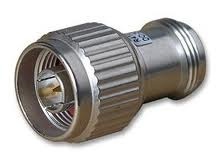
6db 1watt attenuator
3000 INR/Piece
Product Details:
- Product Type Fixed attenuator
- Material Brass body
- Application Communication equipment, test setups, laboratory use, electronic circuits
- Finish Nickel plated
- Power 1 Watt
- Voltage 50V max
- Tolerance ±0.5 dB
- Click to View more
X
6db 1watt attenuator Price And Quantity
- 05 Number
- 3000 INR/Piece
6db 1watt attenuator Product Specifications
- ±0.5 dB
- Nickel plated
- Fixed attenuator
- Brass body
- 50V max
- 1 Watt
- Communication equipment, test setups, laboratory use, electronic circuits
- Approx. 25 grams
- Standard coaxial size; typically 1.5 length x 0.5 diameter (consult manufacturer for exact dimensions)
- Yes
- 50 Ohms
- <1.2:1
- 6 dB
- DC to 3 GHz
- SMA Male to SMA Female
6db 1watt attenuator Trade Information
- Telegraphic Transfer (T/T), Cash Against Delivery (CAD), Paypal, Delivery Point (DP), Cash in Advance (CID)
- N TYPE BNC TYPE DIN TYPE SMA TYPE F TYPE N TYPE1 W N M DUMMY LOAD 3GHZ 2 W N M DUMMY LOAD 3GHZ 5 W N M DUMMY LOAD 3GHZ 10 W ... 5 W DIN M DUMMY LOAD 3GHZ.
- All India
- N TYPE BNC TYPE DIN TYPE SMA TYPE F TYPE N TYPE1 W N M DUMMY LOAD 3GHZ 2 W N M DUMMY LOAD 3GHZ 5 W N M DUMMY LOAD 3GHZ 10 W ... 5 W DIN M DUMMY LOAD 3GHZ.
Product Description
Ads
Ads
High Precision Attenuation
Engineered with a tight 0.5 dB tolerance, this attenuator ensures reliable signal reduction for a broad range of RF and microwave applications. Its 6 dB attenuation value makes it suitable for accurately stepping down signal power without causing significant signal distortion, benefiting both testing and operational environments.
Versatile Applications and Connectivity
Featuring an SMA Male to SMA Female configuration and operating from DC up to 3 GHz, this attenuator is compatible with standard communication and laboratory equipment. Its nickel-plated brass construction offers corrosion resistance, while its compact size and 1-watt power rating suit it for portable or benchtop setups.
FAQs of 6db 1watt attenuator:
Q: How does a 6 dB, 1-watt attenuator improve my test setup or communication device?
A: It precisely reduces the signal strength by 6 dB, protecting sensitive instruments or components from high input levels. This enables safer, more accurate signal measurement and transmission in communication systems, laboratory experiments, and circuit testing.Q: What is the correct way to install and use this SMA attenuator?
A: Ensure both connectors, SMA Male and SMA Female, are properly aligned before fastening. Screw the attenuator into place hand-tight without over-torquing, integrating it into your signal path where attenuation is required. It can be used with compatible 50-ohm devices across DC to 3 GHz frequencies.Q: When should I choose this 6 dB attenuator over other values?
A: A 6 dB attenuator is ideal when you need to halve the voltage signal (or reduce power by about 75%). It is best used when precise moderate signal reduction is needed, such as matching equipment levels or protection in laboratory and field applications.Q: Where can this attenuator be applied in practical scenarios?
A: It is suitable for use in RF communication setups, electronic circuit prototypes, laboratory testing stations, and instrument calibration in commercial, educational, and industrial environments, given its frequency range and reliable power handling.Q: What process is followed to ensure product reliability and RoHS compliance?
A: This attenuator is manufactured using high-grade brass and finished with nickel plating for durability. Rigorous quality checks are performed to maintain dimensional accuracy, strict tolerance, and environmental compliance according to RoHS guidelines.Q: What benefits do I gain from using a RoHS-compliant, nickel-plated brass attenuator?
A: RoHS compliance assures you of an environmentally friendly product, while the nickel-plated brass body provides long-lasting performance, corrosion resistance, and stable attenuation.Tell us about your requirement

Price:
Quantity
Select Unit
- 50
- 100
- 200
- 250
- 500
- 1000+
Additional detail
Mobile number
Email

Other Products in 'RF ATTENUATOR' category


Contact Details
- KHASRA NO.33/23, MUNDKA INDUSTRIAL AREA, MUNDKA,New Delhi - 110041, India
- Phone : 07313726109
Contact Details
- Mr Pradeep Synergy AGRAWAL (Director)
- Mobile :07313726109
- Send Inquiry
 Send Inquiry
|


SYNERGY TELECOM (P) LTD.
All Rights Reserved.(Terms of Use)
Developed and Managed by Infocom Network Private Limited.
Developed and Managed by Infocom Network Private Limited.

