07313726109


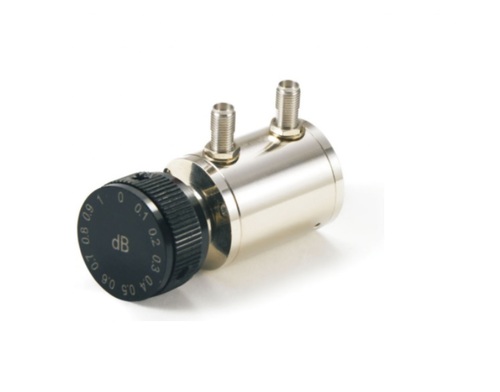
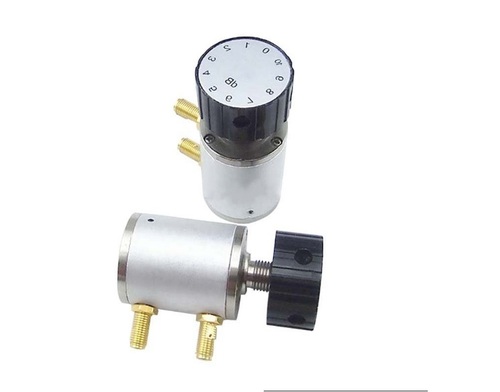
Manual Knob Variable Step Attenuator 1dB (Single Rotor Type)
92000 INR/Piece
Product Details:
- Product Type RF DUMMY LOAD
- Material Brass
- Usage Mobile Communication Network Optimization and Indoor distribution system
- Application IBS & BTS
- Power 5 Watt (w)
- Voltage 50 Ohm (ohm)
- Weight 400 Grams (g)
- Click to View more
X
Manual Knob Variable Step Attenuator 1dB (Single Rotor Type) Price And Quantity
- 92000 INR/Piece
- 5 Piece
Manual Knob Variable Step Attenuator 1dB (Single Rotor Type) Product Specifications
- 50 Ohm (ohm)
- 400 Grams (g)
- RF DUMMY LOAD
- IBS & BTS
- 5 Watt (w)
- Brass
- Mobile Communication Network Optimization and Indoor distribution system
Manual Knob Variable Step Attenuator 1dB (Single Rotor Type) Trade Information
- New Delhi
- Cash on Delivery (COD), Cheque, Delivery Point (DP), Letter of Credit (L/C), Letter of Credit at Sight (Sight L/C), Telegraphic Transfer (T/T), Western Union, Paypal, Cash Against Delivery (CAD), Days after Acceptance (DA), Cash in Advance (CID), Cash Advance (CA)
- 5 Piece Per Day
- 3-4 Week
- Yes
- Free samples available with shipping and taxes paid by the buyer
- As Required Buyer
- Australia, South America, Western Europe, Middle East, Africa, Central America, Asia, Eastern Europe, North America
- All India
Product Description
Manual Knob Variable Step Attenuator 1dB (Single Rotor Type)
Applications:
- In-building Distribution System and Mobile Communication Network Optimization;
- Split the one Input signal into 2,3 or more paths in telecommunication applications;
- Radar, electronic navigation and electric confrontation;
- Aerospace equipment systems;
- Cluster communication, satellite communication, shortwave communication and hopping radio.
Enhancing Network Performance
This attenuator plays a critical role in calibrating signal strength within mobile communication networks. By providing precise 1dB step attenuation, it enables engineers to optimize and balance indoor signal distribution, particularly in dense urban environments and complex in-building systems. Such balance ensures reduced signal interference and overall system reliability.
Durable and Efficient Design
Crafted from strong brass material, this attenuator offers long-lasting durability while handling continuous 5 Watt power. The 50 Ohm impedance ensures compatibility with standard communication equipment. Its compact, 400-gram form factor and user-friendly single rotor knob make it an ideal choice for both field and lab use.
FAQs of Manual Knob Variable Step Attenuator 1dB (Single Rotor Type):
Q: How is the Manual Knob Variable Step Attenuator used in mobile communication networks?
A: It is employed to regulate and fine-tune signal strength between components within mobile communication networks, such as in IBS and BTS setups. By adjusting the attenuation in controlled 1dB increments, engineers can address signal imbalances, minimize interference, and optimize coverage throughout indoor and distributed systems.Q: What benefits does the 1dB step feature offer in an attenuator?
A: The 1dB step feature allows for highly precise adjustments to the attenuation level, enabling fine control over signal power without abrupt changes. This precision ensures optimal signal quality and consistency, which is essential for stable mobile communication performance.Q: When is it appropriate to use this type of attenuator?
A: It is most appropriate when fine-tuning signal levels is necessarysuch as during network optimization, troubleshooting, or when deploying IBS and BTS infrastructure in buildings and urban environments. Its use is especially relevant when precise signal management directly impacts communication quality.Q: Where can this product be installed within a communication system?
A: The attenuator typically connects between signal source componentslike transmitters and receiversor anywhere signal strength adjustment is required in the indoor distribution path. It is suitable for both network labs and live infrastructure environments.Q: What is the process of adjusting the attenuation with this product?
A: Adjustment is performed using the manual knob on the single rotor. Each rotation changes the attenuation by 1dB, providing tactile and intuitive control. This process requires no external power source or software interface, making it suitable for rapid field adjustments.Q: What advantages does the brass material provide for this attenuator?
A: Brass offers excellent electrical conductivity and corrosion resistance, contributing to the devices reliability and long lifespan. Its sturdy nature ensures the product can withstand frequent use in various operating conditions common in the communications industry.Tell us about your requirement

Price:
Quantity
Select Unit
- 50
- 100
- 200
- 250
- 500
- 1000+
Additional detail
Mobile number
Email

Other Products in 'Variable Attenuator' category

Contact Details
- KHASRA NO.33/23, MUNDKA INDUSTRIAL AREA, MUNDKA,New Delhi - 110041, India
- Phone : 07313726109
Contact Details
- Mr Pradeep Synergy AGRAWAL (Director)
- Mobile :07313726109
- Send Inquiry
 Send Inquiry
|


SYNERGY TELECOM (P) LTD.
All Rights Reserved.(Terms of Use)
Developed and Managed by Infocom Network Private Limited.
Developed and Managed by Infocom Network Private Limited.