


07313726109


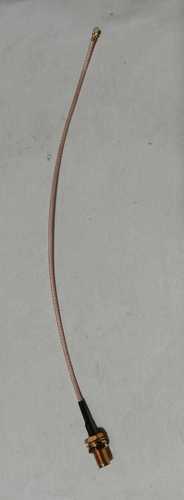
UHF F LMR 100 CRIMP CONNECTOR
40 INR/Piece
Product Details:
- Product Type UHF CONNECTOR
- Material BRASS
- Usage RF Network & RF Cable Assemblies
- Application RF Equipment & IBS - BTS
- Power 50 Watt (w)
- Voltage 50 Ohm (ohm)
- Weight 10 Grams (g)
- Click to View more
X
UHF F LMR 100 CRIMP CONNECTOR Price And Quantity
- 5 Piece
- 40 INR/Piece
UHF F LMR 100 CRIMP CONNECTOR Product Specifications
- 50 Ohm (ohm)
- RF Equipment & IBS - BTS
- BRASS
- 10 Grams (g)
- UHF CONNECTOR
- 50 Watt (w)
- RF Network & RF Cable Assemblies
UHF F LMR 100 CRIMP CONNECTOR Trade Information
- New Delhi
- Telegraphic Transfer (T/T), Paypal, Days after Acceptance (DA), Cash in Advance (CID), Cash Advance (CA)
- 5000 Piece Per Day
- 1-2 Days
- Yes
- Free samples available with shipping and taxes paid by the buyer
- As Required Buyer
- Australia, North America, Eastern Europe, Middle East, South America, Africa, Central America, Western Europe, Asia
- All India
Product Description
Electrical:
Characteristic Impedance 50 ohm
Frequency Range DC-4 GHz
VSWR 1.15@DC-3 GHz
Dielectric Withstanding Voltage 1000V RMS,50Hz,at sea level
Dielectric Resistance 5000M
Contact Resistance Center Contact 1m
Outer Contact 0.25m
Precision Engineering for RF Applications
Manufactured from premium brass, the UHF F LMR 100 Crimp Connector delivers stable signal transmission and long-term durability. Its design fits various RF equipment, ensuring a secure fit and minimal signal loss during use.
Versatile Usage in Networks
Perfect for RF network and cable assembly tasks, this connector is compatible with IBS and BTS equipment. It provides a reliable interface critical for clear signal propagation in professional installations.
FAQs of UHF F LMR 100 CRIMP CONNECTOR:
Q: How is the UHF F LMR 100 Crimp Connector installed in RF cable assemblies?
A: The connector is crimped onto compatible LMR 100 cables using a dedicated crimping tool. This process involves properly stripping the cable, inserting it into the connector, and securely crimping it to ensure strong electrical and mechanical contact.Q: What are the benefits of using a brass material for this connector?
A: Brass offers excellent conductivity, corrosion resistance, and mechanical strength, making it an ideal choice for long-lasting and reliable RF connections in various environmental conditions.Q: When should I use this UHF Crimp Connector in my RF systems?
A: It is best used in situations requiring dependable connections for RF equipment, IBS, or BTS networks, especially when lightweight and compact assembly is desired without compromising signal quality.Q: Where can I purchase the UHF F LMR 100 Crimp Connector in India?
A: This connector is available through authorized distributors, manufacturers, suppliers, traders, and wholesalers throughout India. You can contact local suppliers or specialized RF component dealers for procurement.Q: What processes are involved in integrating this connector with RF equipment?
A: The integration process includes selecting the correct cable type (LMR 100), using the appropriate crimping tool for secure attachment, and verifying both mechanical and electrical connectivity prior to installation in the RF system.Q: How does the 50 Ohm impedance benefit RF network performance?
A: A 50 Ohm impedance matches common RF equipment standards, helping to minimize signal reflection and loss. This ensures optimal signal strength and clarity in communication networks.Tell us about your requirement

Price:
Quantity
Select Unit
- 50
- 100
- 200
- 250
- 500
- 1000+
Additional detail
Mobile number
Email

Other Products in 'UHF CONNECTOR' category



Contact Details
- KHASRA NO.33/23, MUNDKA INDUSTRIAL AREA, MUNDKA,New Delhi - 110041, India
- Phone : 07313726109
Contact Details
- Mr Pradeep Synergy AGRAWAL (Director)
- Mobile :07313726109
- Send Inquiry
 Send Inquiry

|


SYNERGY TELECOM (P) LTD.
All Rights Reserved.(Terms of Use)
Developed and Managed by Infocom Network Private Limited.

